
Key Outcomes
Identified the main areas that attract people and the ones that produce the most demand.
Gained understanding how flows evolve by time-of-day, separating commuter peaks from other mobility behaviours.
Highlighted key corridors and zones under pressure to support prioritisation of interventions.
Measured in- and outbound people movement beyond the province, including the origin of arrivals from outside Sardinia.
Get in touch
Book a consultation with one of our experts.
The Challenge
Understanding people movement in Cagliari
Located in Southern Sardinia (Italy), the Province of Cagliari sits at the heart of one of the country’s most recognisable island destinations. Mobility in this context is shaped by multiple forces at once: everyday movements of residents, recurring commuter flows, and seasonal travel driven by tourism. On top of that, the area is influenced by two major gateways: the Port of Cagliari and the airport, which play a direct role in how people enter, move through, and leave the territory.
As part of the work supporting the Sustainable Urban Mobility Plan (SUMP), the Province of Cagliari needed a clear, evidence-based understanding of mobility demand: where people actually travel from and to, which areas attract the highest volumes, what generates mobility, and how these patterns change throughout the day and across the year.
The Solution
Gaining a clear understanding of people movement and its effects on the Sustainable Urban Mobility Plan
CKDelta supported the project through △Mobility, a mobility analytics service developed in collaboration with WindTre. By leveraging telco-based insights drawn from a reference base of over 19 million users in Italy, the analysis provided a continuous and data-driven view of mobility dynamics, helping move from assumptions to measurable evidence.
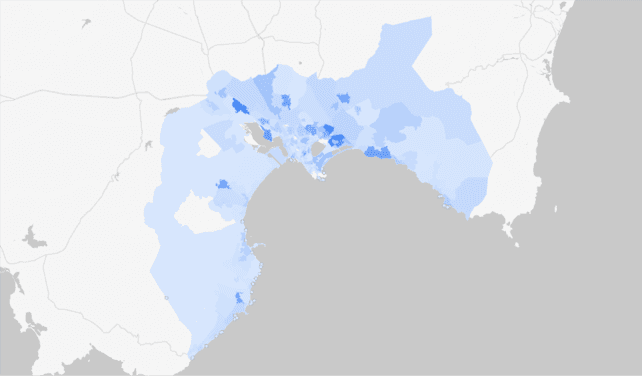
The study covered 12 months of the most recent data and used a detailed spatial framework, dividing the provincial territory into 300+ areas based on aggregated census units. This enabled a robust reading of mobility flows, capturing different layers of demand: daily resident mobility, commuter-driven peaks, and movements linked to inbound and outbound travel.
A key part of the work focused on assessing the people movement impact of the Port of Cagliari. Beyond counting arrivals, the analysis explored what happens next: whether people spend time within the city, how they spread across different areas, and whether the port mainly drives local activity or rapid onward travel. In parallel, movements linked to the airport were analysed to provide a complete picture of the two main entry points shaping mobility within the province.
Overall, the analysis provided the Province of Cagliari with a solid foundation to support the development of the SUMP, distinguishing structural mobility patterns (residents and commuters) from gateway-driven dynamics linked to port, airport and seasonality, and translating mobility evidence into clearer planning priorities.